
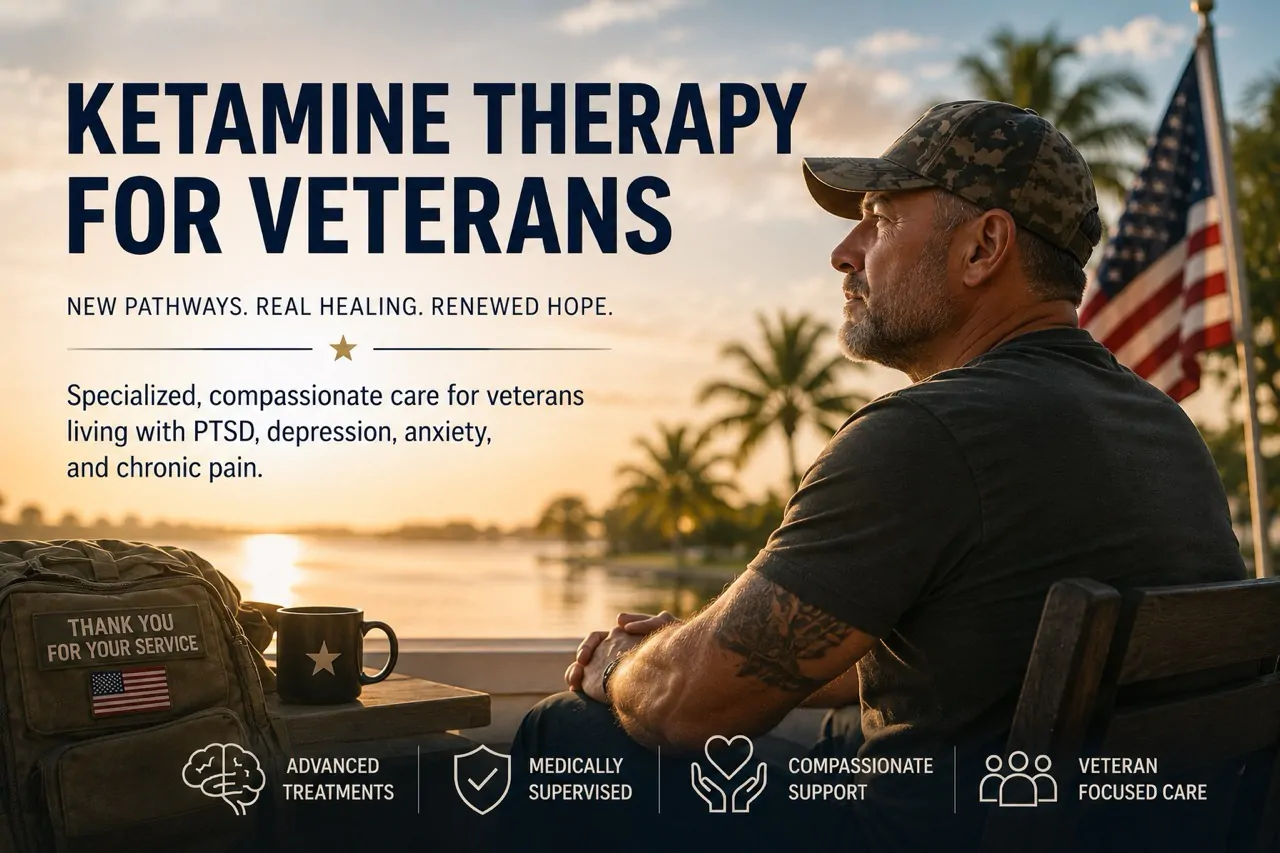
Ketamine Therapy for Veterans: Personalized Mental Health Care
Medically reviewed by Nicholas Marino, MBA, Co-Founder and CEO, Allay Health and Wellness Veterans carry a weight that most people never fully understand. The psychological cost of military service, including combat exposure, moral injury, survivor’s guilt, traumatic brain injury, and the difficulty of transitioning back to civilian life, creates a constellation of mental health challenges that standard VA-offered treatments frequently fail to address adequately. Ketamine therapy for veterans has emerged as a clinically significant option for those who have not found sufficient relief through conventional medications or trauma-focused psychotherapy. Allay Health and Wellness offers ketamine therapy for veterans from its Palm Beach Gardens clinic, serving patients from across Palm Beach County, Broward County, and South Florida. This is not a quick fix or a miracle treatment. It is a supervised, off-label clinical program administered by a licensed team with more than eight years of experience in this region. If you are a veteran who has tried multiple psychiatric medications, engaged in therapy, and still finds yourself stuck, this is worth understanding in detail.Why Standard Treatments Often Fall Short for Veterans
The mental health burden on the veteran population in the United States is significant. PTSD affects a substantial portion of post-9/11 combat veterans. Major depressive disorder and treatment-resistant depression are disproportionately common. Suicide rates among veterans remain alarmingly elevated compared to the general population. And yet the standard tools deployed in response, SSRIs, SNRIs, cognitive processing therapy, and prolonged exposure, have meaningful dropout rates and leave a large portion of the veteran population without adequate symptom relief. Several factors specific to military service complicate standard treatment. Combat-related trauma is often layered, cumulative, and morally complex in ways that standard trauma models were not designed to address. Many veterans also carry chronic physical pain alongside their psychiatric diagnoses, having sustained musculoskeletal injuries, nerve damage, or TBI during service. The relationship between physical pain and depression in this population is not incidental. It is neurological, and it calls for clinical approaches that can address both simultaneously. Ketamine therapy for veterans addresses this complexity in ways that conventional antidepressants do not, by working on the glutamate system through NMDA receptor modulation rather than the serotonin, norepinephrine, or dopamine pathways that most standard medications target.What Ketamine Therapy for Veterans Involves: The Off-Label Reality
Ketamine therapy for veterans, specifically IV ketamine infusion therapy, is an off-label treatment. The FDA has not approved IV ketamine infusions for PTSD, depression, chronic pain, anxiety, or any other mental health or pain condition. Ketamine was originally FDA-approved as an anesthetic in the 1970s, and its use in psychiatric and pain applications is off-label, meaning licensed clinicians prescribe it for these purposes based on clinical judgment and a growing body of published research, but without specific FDA approval for those indications. This distinction must be stated clearly. Any provider that characterizes IV ketamine for veterans as an FDA-approved psychiatric treatment is providing inaccurate information. At Allay Health and Wellness, every patient considering ketamine therapy for veterans is informed of the off-label status before evaluation begins, before any commitment is made, and before treatment starts. That said, off-label does not mean experimental in a vacuum. Off-label prescribing is a legal, standard, and widely practiced dimension of medical care. Many of the most effective treatments in medicine were used off-label for years before FDA approval processes caught up with clinical practice.Conditions Ketamine Therapy for Veterans May Address
Veterans who come to Allay Health and Wellness for ketamine therapy most commonly present with one or more of the following conditions. In every case, off-label IV ketamine is evaluated individually, and no specific outcome is guaranteed.PTSD
Combat-related PTSD is the condition most closely associated with ketamine therapy for veterans in the published research. Standard first-line treatments for PTSD include cognitive processing therapy, prolonged exposure, EMDR, and SSRI or SNRI medications. For veterans who have engaged fully with these approaches and still carry a significant PTSD symptom burden, off-label IV ketamine for PTSD is one of the more studied alternative clinical options.Treatment-Resistant Depression
Veterans with major depressive disorder who have not responded to two or more antidepressants at adequate doses and durations may meet the clinical threshold for treatment-resistant depression. For this population, two ketamine-based options may be relevant depending on individual clinical factors. Off-label IV ketamine for depression is one option. The other is Spravato (esketamine), which is FDA-approved specifically for treatment-resistant depression used alongside an oral antidepressant, and for depressive symptoms in adults with major depressive disorder with acute suicidal ideation or behavior. Spravato is the only FDA-approved ketamine-based treatment for these specific indications. It is not approved for PTSD, chronic pain, or anxiety, and it is never prescribed at Allay Health and Wellness for those conditions.Chronic Pain
Veterans frequently present with chronic pain alongside psychiatric diagnoses, and the two are often neurologically intertwined. Ketamine’s action on NMDA receptors may help interrupt central sensitization in conditions including neuropathic pain, CRPS, and musculoskeletal pain syndromes common after military service. This use is off-label. Many veterans seeking ketamine therapy present with overlapping conditions: PTSD and depression, chronic pain and anxiety, or substance use alongside trauma. Our clinical team evaluates all presenting conditions during intake.Supporting Veterans Beyond the Infusion Experience
For many veterans, ketamine therapy for veterans may involve more than the infusion appointment itself. Trauma, depression, anxiety, and chronic stress often require a broader care structure that includes preparation, clinical monitoring, and follow-up support. At Allay Health and Wellness, ketamine assisted therapy combines medically supervised IV ketamine infusions with preparation and integration support when clinically appropriate. Rather than viewing the infusion as a standalone intervention, we encourage patients to see it as one part of a comprehensive mental health plan that may also include psychotherapy, medication management, lifestyle changes, and continued follow-up with their healthcare providers. This approach helps veterans understand what to expect before treatment and process their experience afterward with professional guidance. The infusion may create temporary changes in perception or emotional awareness, and some patients may benefit from discussing those experiences in a structured setting after the session. Ketamine assisted therapy does not replace ongoing mental health care, medication management, or trauma-focused therapy. Instead, it may support a more comprehensive treatment plan based on the veteran’s history, diagnosis, and safety needs. Individual responses vary, and no specific outcome is guaranteed.What Ketamine Therapy for Veterans Actually Looks Like at Allay Health and Wellness
Understanding what the clinical experience of ketamine therapy for veterans involves, session by session, helps patients prepare and make informed decisions.- Intake evaluation: Before any treatment is scheduled, every veteran undergoes a thorough clinical assessment. This covers diagnosis history, prior treatment attempts, current medications, cardiovascular health, substance use history, and individual risk factors. Ketamine is a Schedule III controlled substance, and a substance use history is evaluated carefully. This does not automatically disqualify a veteran, but it is a clinically significant factor that shapes the recommendation.
- Informed consent: Every patient receives a full explanation of the off-label status of IV ketamine, all known side effects and risks, realistic expectations for outcomes, and what the treatment schedule involves. No treatment begins without informed consent.
- The infusion session: IV ketamine is administered slowly through an intravenous line while you remain in a private, monitored clinical room. Sessions typically last 40 to 60 minutes. A licensed clinician is present and monitoring your vital signs throughout. You remain conscious but will experience a dissociative state, which is an expected and temporary effect of the medication at therapeutic doses.
- Post-session observation: Following the infusion, you remain at the clinic briefly for observation. You may not drive. A responsible adult must arrange transportation home, and you should plan to rest for the rest of that day.
- Standard protocol: A typical initial therapy course involves six infusions over two to three weeks. Maintenance sessions may follow based on clinical response.
Insurance and VA Coverage Considerations for Veterans
Understanding insurance is an important part of planning ketamine therapy for veterans. Coverage depends on the recommended treatment, the veteran’s diagnosis, medical necessity, and the specific insurance plan. At Allay Health and Wellness, we help veterans understand their coverage before treatment begins by verifying benefits, explaining anticipated costs, and discussing available payment options. Our goal is to ensure that every patient has clear information before making a treatment decision. Off-label IV ketamine infusion therapy for PTSD, depression, anxiety, and chronic pain is generally not covered by most insurance plans because these indications have not received FDA approval for IV ketamine. The U.S. Department of Veterans Affairs does not routinely provide coverage for off-label IV ketamine as part of its standard mental health benefits, so veterans should confirm their individual eligibility directly with the VA or their insurance provider. Veterans diagnosed with treatment-resistant depression may have different insurance pathways if they qualify for Spravato, which is FDA-approved for specific depression-related indications. Medicare Part B, Cigna, United Healthcare, and Aetna may provide coverage when eligibility and medical necessity requirements are met. Before beginning ketamine therapy for veterans, our team reviews benefits, discusses expected costs, and assists with insurance verification so patients understand their financial responsibilities in advance.Risks and Side Effects Every Veteran Needs to Know
Ketamine therapy for veterans carries real risks that must be understood before treatment begins. Full disclosure is not a formality at Allay Health and Wellness. It is a clinical obligation.- Dissociation: A temporary altered state involving changes in perception of time, space, or self. This is an expected and well-documented effect of ketamine at therapeutic doses. For veterans with PTSD histories, the dissociative experience can sometimes surface unexpected emotional material. Clinical staff are present throughout every session to provide support and intervene if needed.
- Sedation: Ketamine produces sedation. Patients may not drive on the day of any session. A responsible adult must arrange transportation home.
- Blood pressure changes: Temporary increases in blood pressure are common during infusions. Vital signs are checked before, during, and after every session.
- Nausea and dizziness: Generally mild and typically resolving within the post-session period.
- Psychological effects: Some patients, particularly those with trauma histories, experience anxiety, heightened emotional responses, or unusual perceptions during the infusion. Clinical staff are present throughout every session.
- Controlled substance considerations: Ketamine is a Schedule III controlled substance under federal law. Dependency risk at supervised therapeutic doses in a licensed clinical setting is considered low but is not zero. This is especially relevant for veterans with histories of substance use, who are evaluated carefully at intake.
Veterans We Serve Across South Florida
Many individuals seeking ketamine therapy for veterans travel to Allay Health and Wellness from communities throughout Palm Beach and Broward Counties. Conveniently located in Palm Beach Gardens, our clinic serves veterans from West Palm Beach, Jupiter, North Palm Beach, Riviera Beach, Royal Palm Beach, Lake Park, Palm Springs, Juno Beach, Stuart, Boca Raton, Delray Beach, Deerfield Beach, and surrounding South Florida communities. Veterans often choose our location because it provides access to experienced clinicians in a medically supervised setting while remaining within reasonable driving distance for follow-up appointments. Every veteran receives the same individualized approach regardless of where they live. Before discussing treatment options, our clinical team performs a comprehensive evaluation that reviews military service history when relevant, previous mental health treatment, current medications, physical health, and overall treatment goals. This careful assessment helps determine whether additional evaluation or treatment may be appropriate. Patients considering ketamine therapy for veterans receive clear information about available options, clinical monitoring, realistic expectations, and ongoing follow-up so they can make informed decisions based on their unique circumstances rather than generalized recommendations.Why Veterans Choose Allay Health and Wellness
Choosing a provider for ketamine therapy for veterans requires confidence in the clinical team’s experience, professionalism, and commitment to patient safety. Veterans often arrive after years of managing PTSD, depression, chronic pain, anxiety, or multiple co-occurring conditions, making individualized evaluation especially important. At Allay Health and Wellness, we approach every veteran with respect, transparency, and evidence-informed care rather than promising guaranteed results or one-size-fits-all solutions. Our multidisciplinary team includes Katy Redfield, APRN, Co-Founder and Program Director; Nicholas Marino, MBA, Co-Founder and CEO; Roland Verfaillie, Ph.D., Clinical Director with more than 30 years of experience in trauma recovery and mental health; and Daniel Cartledge, M.D., consultant and double board-certified in pain management and physical medicine and rehabilitation. Together, they provide coordinated care that emphasizes informed consent, careful monitoring, and personalized treatment planning. Veterans exploring ketamine therapy for veterans receive honest discussions about potential benefits, known risks, regulatory status, and long-term care planning. Our Florida ketamine clinic’s goal is to help every patient understand their options through compassionate guidance, clinical expertise, and ongoing support throughout the treatment process.FAQs about Ketamine Therapy for Veterans
Q1. Is ketamine therapy for veterans FDA-approved? No. IV ketamine infusion therapy is an off-label treatment for mental health conditions. Spravato is the only FDA-approved ketamine-based treatment for specific depression-related indications and is not approved for PTSD. Q2. Does the VA cover ketamine therapy for veterans? The VA does not generally cover off-label IV ketamine infusions as a standard mental health benefit. Some veterans with treatment-resistant depression may have insurance pathways for Spravato, depending on eligibility and coverage. Q3. Can veterans with a history of substance use receive ketamine therapy? Possibly. A history of substance use does not automatically prevent treatment, but it requires careful evaluation because ketamine is a Schedule III controlled substance. Clinical recommendations are made individually. Q4. How many ketamine therapy sessions do veterans typically need? A standard initial course often includes six IV ketamine infusions over two to three weeks. Maintenance sessions may be recommended based on diagnosis, clinical response, and ongoing evaluation. Q5. Can ketamine therapy for veterans be combined with therapy or medication? Yes. Ketamine therapy for veterans is often provided alongside psychotherapy, medication management, or other mental health services. Treatment plans are individualized based on each veteran’s clinical needs. Q6. What is the difference between ketamine therapy for veterans and Spravato? Ketamine therapy for veterans typically involves off-label IV ketamine, while Spravato is an FDA-approved nasal spray for specific depression-related indications. They differ in approval status, administration, and insurance coverage. Q7. Do I need a VA referral to schedule a consultation? No. Veterans may schedule a consultation directly. Bringing diagnosis records, medication history, and previous treatment information helps the clinical team perform a comprehensive evaluation.Schedule a Consultation to Allay Health and Wellness
If you are a veteran who has not found adequate relief through conventional treatments and wants to speak with a licensed clinical team about ketamine therapy for veterans, Allay Health and Wellness is ready to help.Allay Health and Wellness
11000 Prosperity Farms Rd, Suite 101
Palm Beach Gardens, FL 33410
Phone: (561) 421-6444
Email: [email protected]
Veterans and their families can also learn what trauma-informed care looks like for veterans in Palm Beach County.
Service members coping with lasting trauma can explore ketamine therapy for combat PTSD.