PTSD Ketamine Treatment PBG | Allay Health & Wellness
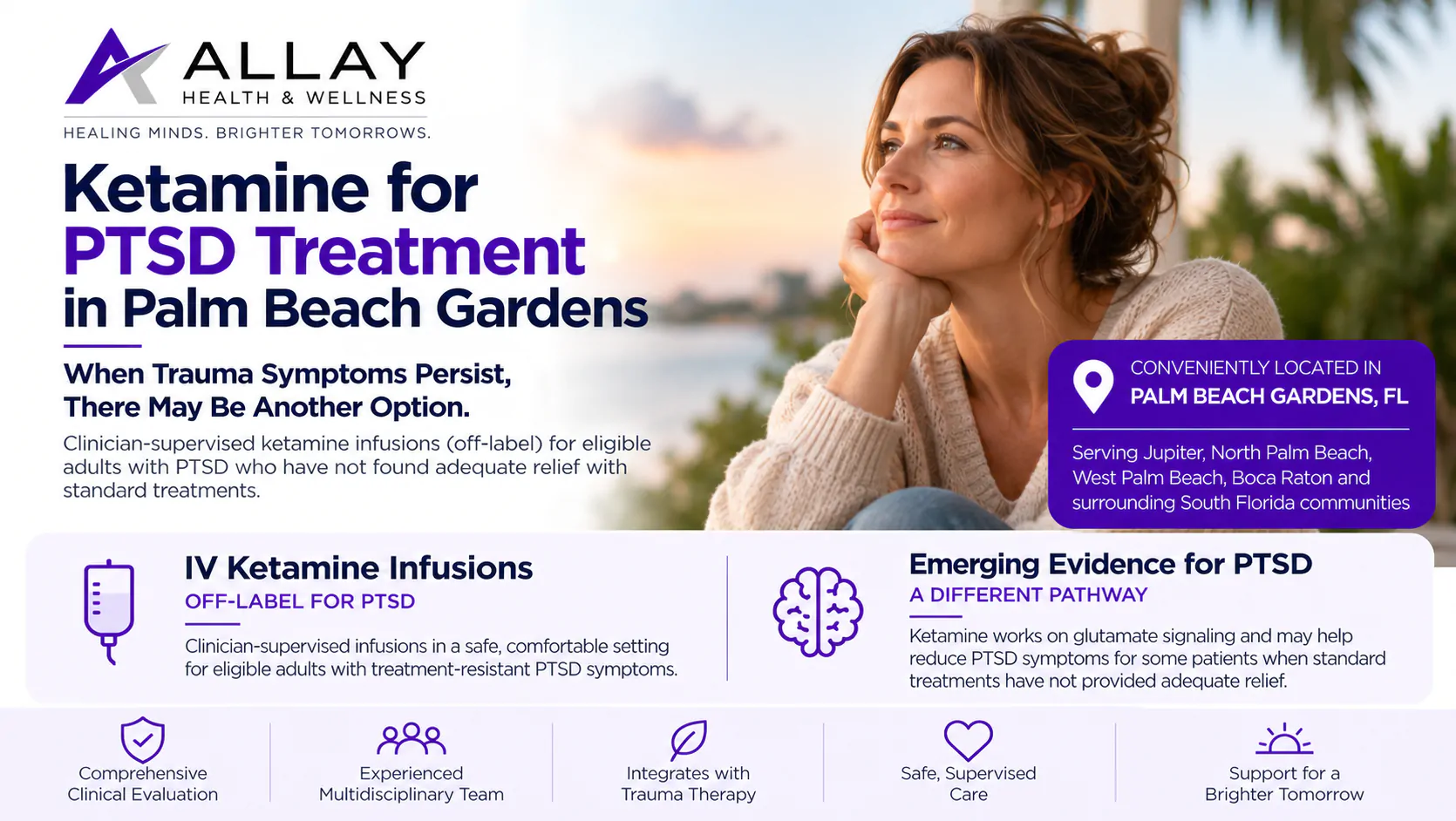
Post-traumatic stress disorder is one of the most undertreated and most disabling psychiatric conditions in adult mental health. Standard first line interventions, including SSRIs, SNRIs, and evidence based trauma therapies such as EMDR and CPT, help many patients significantly. But for a substantial subset of adults with PTSD, those treatments produce inadequate relief, leaving them trapped in cycles of hypervigilance, intrusive memories, emotional numbing, and disrupted functioning that persist for years. If you are searching for ketamine for PTSD Palm Beach Gardens options that go beyond the standard medication playbook, Allay Health and Wellness offers clinically supervised ketamine infusions as an off label treatment for adults 18 and older with treatment resistant PTSD symptoms.
This guide explains PTSD symptoms and the biological processes being studied, including glutamate signaling and ketamine’s effects on NMDA receptors. It also outlines the emerging evidence, limitations, and regulatory distinction between IV ketamine and Spravato (esketamine), neither of which is FDA approved for PTSD. You’ll learn how clinicians assess treatment suitability, review medications and medical risks, explain informed consent, and monitor patients during and after infusions. The page also covers treatment scheduling, coordination with trauma focused therapy, mental health crisis resources, frequently asked questions, and how to arrange a consultation. Ketamine is not a substitute for established PTSD care, and results cannot be guaranteed.
Understanding PTSD: Symptoms, Neurobiology, and Why Standard Treatments Fall Short
Post-traumatic stress disorder develops after exposure to actual or threatened death, serious injury, or sexual violence, either experienced directly, witnessed, or learned of in connection with a close person. Its symptom clusters are well characterized: intrusion symptoms such as flashbacks and nightmares; persistent avoidance of trauma related cues; negative alterations in cognition and mood, including pervasive shame, guilt, emotional blunting, and detachment from others; and marked alterations in arousal and reactivity, including hypervigilance, exaggerated startle responses, irritability, and sleep disturbance. The NIMH PTSD overview provides a comprehensive summary of diagnostic criteria, prevalence, and evidence based treatments for adults. What drives these symptoms, at the neurobiological level, is not simply psychological. PTSD involves measurable structural and functional changes in the brain. The amygdala becomes hyperreactive, triggering fear responses to cues that no longer represent genuine danger. The prefrontal cortex, which regulates emotional responses and enables extinction of conditioned fear, shows reduced activity. The hippocampus often shows volume reduction in chronic PTSD, and the hypothalamic-pituitary-adrenal (HPA) axis is dysregulated, producing abnormal cortisol patterns.
First line pharmacological treatments for PTSD act on serotonin and norepinephrine reuptake. They reduce symptom severity in many patients but address the monoamine system rather than the glutamatergic dysregulation underlying much of PTSD’s neurobiology. Trauma focused therapies are highly effective but require extended engagement and leave a meaningful proportion of patients with persistent residual symptoms. For adults who have not responded to standard care, these gaps are why ketamine for PTSD Palm Beach Gardens providers are sought with increasing frequency. If you are among adults 18 and older who have exhausted first line options, ketamine for PTSD Palm Beach Gardens at Allay may represent a meaningful next step.
Important Regulatory Disclosure: Ketamine for PTSD Is Off Label
Before describing how ketamine may help with PTSD, Allay Health provides the following regulatory disclosure, which is required for informed treatment decisions. Neither IV ketamine nor Spravato (esketamine) is FDA approved for the treatment of PTSD. This is the single most important regulatory fact any prospective patient must understand before beginning ketamine for PTSD Palm Beach Gardens treatment.
IV ketamine is not FDA approved for any psychiatric indication. Its use for PTSD, depression, anxiety, or any other mental health condition is entirely off label. It means the FDA has not evaluated and approved ketamine specifically for PTSD through its formal drug approval process. Spravato is FDA approved only for treatment resistant depression and major depressive disorder with acute suicidal ideation. It is not approved for PTSD. At Allay, ketamine for PTSD Palm Beach Gardens treatment is delivered through IV ketamine infusions. Spravato’s insurance coverage and REMS protocol are tied to its approved TRD/MDD-SI indications; patients considering Spravato for PTSD should discuss this distinction with their provider.
Off label prescribing is legal and common in medicine. There is a meaningful body of peer reviewed research on ketamine’s effects in PTSD, and clinical outcomes data from off label use are encouraging. Allay discloses regulatory status prominently at every stage of ketamine for PTSD Palm Beach Gardens intake. The NAMI resource on PTSD provides additional background on diagnosis, treatment options, and recovery.
How Ketamine May Help PTSD: Mechanisms and Evidence
The rationale for ketamine for PTSD Palm Beach Gardens treatment is grounded in ketamine’s mechanism as an NMDA receptor antagonist. NMDA receptors are glutamate receptors critical to synaptic plasticity, fear learning, and fear extinction. In PTSD, these processes are pathologically dysregulated, making it difficult for the brain to update its threat response programming in the absence of genuine danger.
Ketamine’s blockade of NMDA receptors produces a rapid burst of synaptic plasticity. This triggers BDNF release and promotes synaptogenesis in the prefrontal cortex, potentially facilitating fear extinction and memory reconsolidation. In human clinical studies, IV ketamine has produced significant reductions in PTSD symptom severity, including intrusion, hyperarousal, and avoidance domains, often within hours of a single infusion. Published research on ketamine for PTSD Palm Beach Gardens includes randomized controlled trials comparing ketamine to midazolam in veterans with PTSD. Effect sizes have been clinically meaningful and onset is faster than standard pharmacological treatments. The evidence base is still developing; the VA/DoD Clinical Practice Guideline for PTSD outlines the standard of care patients reference when evaluating off label options. The neuroplasticity window ketamine opens may also enhance trauma focused psychotherapy delivered near sessions. Allay’s team can discuss integration of ketamine for PTSD Palm Beach Gardens treatment with ongoing therapy and can coordinate with a patient’s existing mental health providers.
Who May Be a Candidate for Ketamine Therapy for PTSD at Allay?
Adults exploring ketamine for PTSD Palm Beach Gardens at Allay Health and Wellness may be considered for an evaluation when PTSD symptoms persist despite appropriate first line treatment. Because IV ketamine is not FDA approved for PTSD, determining suitability requires careful medical and psychiatric assessment. Clinicians review previous treatments, current symptoms, medications, and potential risks before discussing whether off label treatment may be appropriate.
Key factors considered during the evaluation include:
- PTSD diagnosis and symptoms: Patients should have a confirmed PTSD diagnosis or undergo further assessment for symptoms such as intrusive memories, avoidance, hypervigilance, and sleep disturbances. Individuals experiencing combat-related PTSD may require additional consideration of military trauma, co-occurring conditions, and previous treatment experiences.
- Previous treatment history: Clinicians review whether established PTSD treatment approaches, including trauma focused psychotherapy and appropriate medications, have provided sufficient improvement. Ketamine is not recommended as a routine replacement for evidence based PTSD care.
- Medical and psychiatric stability: Uncontrolled hypertension, significant cardiovascular disease, active psychosis, and certain other conditions may make ketamine unsuitable or require additional evaluation.
- Current medications: Benzodiazepines, stimulants, and other psychiatric medications require careful review for potential interactions. Patients should never discontinue prescribed medications without consulting their healthcare provider.
- Substance use history: Ketamine carries risks of misuse and dependence. Patients with co-occurring substance use and mental health concerns require an individualized assessment, although a history of substance use does not automatically determine eligibility.
- Ongoing trauma focused therapy: Patients receiving EMDR, Cognitive Processing Therapy (CPT), or Prolonged Exposure Therapy should discuss how any proposed ketamine treatment would fit into their existing care plan. Although researchers continue investigating ketamine’s potential effects on PTSD symptoms, its long term effectiveness remains uncertain.
For adults considering ketamine for PTSD Palm Beach Gardens, Allay Health and Wellness emphasizes individualized evaluation, informed consent, and appropriate clinical monitoring. Treatment decisions should account for the limited evidence supporting off label ketamine use for PTSD and the importance of continuing established mental health care.
What to Expect: The PTSD Ketamine Treatment Process at Allay
The process for ketamine for PTSD Palm Beach Gardens at Allay Health follows the same clinical structure as all ketamine services at the clinic, with specific attention to the PTSD patient population’s needs and the off label nature of the treatment. Your first appointment is an intake and evaluation session, not a treatment session. You complete a health and psychiatric history form and meet with a licensed Allay provider for a clinical interview covering your trauma history, PTSD symptom profile, prior treatment history, current medications, and medical factors relevant to ketamine candidacy. The session also covers informed consent, including an explicit discussion of off label regulatory status, the current evidence, potential risks, and realistic expectations.
If deemed a candidate, your treatment plan is developed following the intake. A standard IV ketamine induction for PTSD at Allay consists of six infusions over two to three weeks, each approximately 40 to 60 minutes in a monitored clinical setting. You will receive pre-infusion instructions on dietary preparation, medications, and transportation; you may not drive on infusion days.
During each infusion, clinical staff monitor cardiovascular parameters, dissociative effects, and comfort. Transient perceptual effects during the infusion resolve as the infusion ends. A brief post-infusion recovery period precedes discharge. Response is assessed after the induction series. Patients who respond may continue with a maintenance schedule. For ketamine for PTSD Palm Beach Gardens patients with complex trauma presentations, collaborative care with your existing therapist or psychiatrist is strongly encouraged; coordinating these teams is a clinical priority at Allay.
Ketamine Therapy and Mental Health Crisis Resources
PTSD frequently involves periods of acute distress, including dissociative episodes, trauma re-experiencing, and thoughts of self harm. Ketamine treatment at Allay is not an emergency service and is not appropriate for acute crisis intervention. If you or someone you know is experiencing a mental health emergency, suicidal ideation, or acute trauma related crisis, please call or text 988 to reach the Suicide and Crisis Lifeline immediately. Crisis support is available 24 hours a day, seven days a week, with trained counselors who understand trauma related presentations. Veterans experiencing a crisis can also reach the Veterans Crisis Line through 988 by pressing 1 after connecting.
Allay’s clinical team screens for active safety concerns at every visit and will assist in connecting patients to emergency resources if a safety concern arises. Patients experiencing significant distress between sessions are encouraged to contact the clinic directly. Do not wait for your next scheduled session if your safety situation changes. Ketamine for PTSD Palm Beach Gardens care at Allay is delivered in a setting designed to support patients through the full arc of treatment, including the periods between sessions when distress can arise. Allay also offers support for treatment-resistant depression and related mood conditions that commonly co-occur with PTSD. If you are managing both PTSD and depression, your Allay provider will evaluate both dimensions of your clinical picture when developing a treatment plan.
FAQs About Ketamine for PTSD Palm Beach Gardens
- Is ketamine FDA approved for PTSD?
No. Neither IV ketamine nor Spravato (esketamine) is FDA approved for PTSD. IV ketamine is prescribed off label for psychiatric conditions, while Spravato has FDA approved indications for certain depressive disorders. At Allay Health and Wellness, ketamine for PTSD Palm Beach Gardens requires an individualized clinical evaluation, appropriate medical supervision, and informed consent. - How is ketamine different from antidepressants for PTSD?
FDA approved PTSD medications, including sertraline and paroxetine, primarily affect serotonin signaling and may take several weeks to produce noticeable benefits. Ketamine acts through NMDA receptors involved in glutamate signaling. Although research suggests potential benefits for certain PTSD symptoms, evidence remains limited. Adults considering ketamine for PTSD Palm Beach Gardens should understand that ketamine does not replace established PTSD treatments. - Can I continue my current PTSD medications during ketamine treatment?
Some patients can continue their existing psychiatric medications during ketamine treatment, depending on their medical history and prescribed regimen. Certain medications, including benzodiazepines and other central nervous system depressants, require careful review because of potential interactions. Always disclose your medications and consult your prescribing provider before making changes. - Will insurance cover ketamine treatment for PTSD?
IV ketamine for PTSD is an off label treatment and is generally not covered by health insurance. Coverage varies by policy, and patients may need to pay out of pocket. Spravato coverage typically depends on eligibility for its FDA approved indications rather than PTSD alone. Contact Allay Health and Wellness at (561) 421-6444 to discuss current pricing and payment options. - How many ketamine sessions are needed for PTSD?
There is no universally established treatment schedule for IV ketamine in PTSD. Some clinical studies have evaluated repeated infusions over several weeks, but the optimal number of sessions and long term benefits remain uncertain. Patients exploring ketamine for PTSD Palm Beach Gardens should expect an individualized treatment discussion based on their medical history, symptoms, clinical response, and potential risks. - Should I continue trauma focused therapy alongside ketamine?
Yes. Evidence based trauma focused psychotherapy remains a central component of PTSD treatment. Approaches such as Eye Movement Desensitization and Reprocessing (EMDR), Cognitive Processing Therapy (CPT), and Prolonged Exposure Therapy help patients address trauma related symptoms. Ketamine should not replace these established treatments. Coordinating care with your psychiatrist or trauma therapist can support continuity throughout treatment. - Does Allay Health and Wellness treat veterans with PTSD?
Veterans experiencing persistent PTSD symptoms may inquire about ketamine for PTSD Palm Beach Gardens at Allay Health and Wellness. Treatment suitability depends on individual clinical evaluation, previous treatment history, medical conditions, and potential contraindications. Military service alone does not determine eligibility. Veterans should also discuss evidence-based PTSD treatments and any existing VA healthcare arrangements with their providers.
Schedule a PTSD Ketamine Consultation at Allay Health Palm Beach Gardens
If standard PTSD treatments have not provided adequate relief and you are exploring ketamine for PTSD Palm Beach Gardens options, Allay Health and Wellness invites you to schedule an intake consultation. Our clinical team, including Katy Redfield, APRN, and our full provider team, will review your history, discuss your options, and help you determine whether off label ketamine therapy is appropriate for your situation. There is no obligation to begin treatment after the consultation; the intake evaluation is a clinical conversation designed to give you accurate information and a clear path forward.
Allay Health serves adults 18 and older across Palm Beach Gardens, Jupiter, North Palm Beach, Juno Beach, Tequesta, and surrounding Palm Beach County. Ketamine for PTSD Palm Beach Gardens patients come to Allay from across the region specifically because we specialize in treatment resistant presentations and provide the regulatory transparency that complex psychiatric care requires. Beyond ketamine services, we also offer Spravato treatment for treatment resistant depression, hormone replacement therapy for men, women’s hormone replacement therapy, IV therapy, medical weight loss, and chronic pain management. You can also visit our ketamine clinic overview for a complete picture of ketamine services offered at our Palm Beach Gardens location. Take the next step toward understanding your treatment options. To schedule a consultation for ketamine for PTSD Palm Beach Gardens, call Allay Health and Wellness. Our team can discuss appointment availability, evaluation requirements, and treatment related questions.
Allay Health and Wellness
11000 Prosperity Farms Rd, Suite 101
Palm Beach Gardens, FL 33410
Email: [email protected]
Phone: (561) 421-6444
Medical Disclaimer: The content on this page is for informational purposes only and does not constitute medical advice, diagnosis, or treatment. IV ketamine is not FDA-approved for any psychiatric indication, including PTSD. Spravato (esketamine) is not FDA-approved for PTSD; it is approved only for treatment-resistant depression and MDD with acute suicidal ideation. Use of ketamine for PTSD is entirely off-label. Individual results vary, and no specific outcome is guaranteed. Consult a qualified healthcare provider before beginning any new treatment. If you are experiencing a mental health crisis, call or text 988.
Reviewed by Nicholas Marino, MBA, Co-Founder and CEO, Allay Health and Wellness