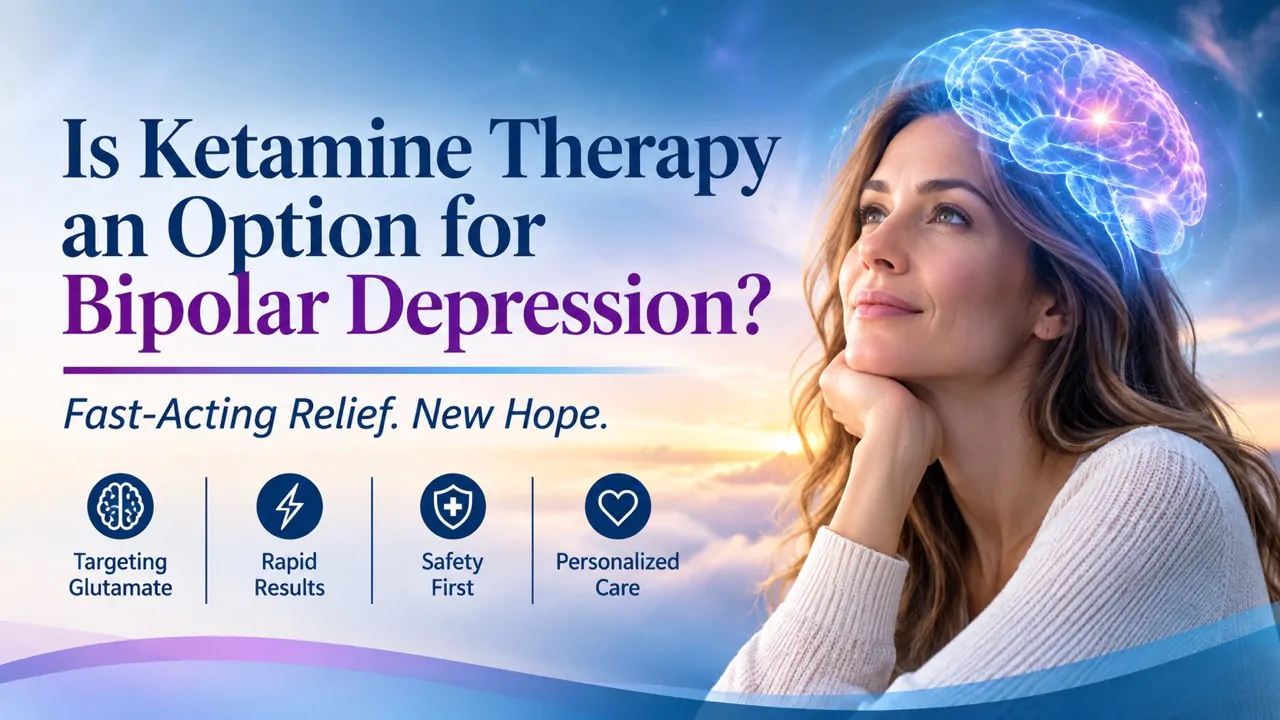
Is Ketamine Therapy an Option for Bipolar Depression?
Bipolar depression can feel heavier and last longer than the highs that define the condition. Many people spend years trying medications that bring only partial relief. That search often leads to questions about ketamine. Research suggests ketamine for bipolar depression may ease symptoms quickly for some adults. Still, it is an off-label treatment with real limits. It is not FDA-approved for bipolar disorder, and it is not safe for everyone. This guide explains why bipolar depression resists treatment and how ketamine differs. It also covers who may qualify and what safety steps matter. Learn how Allay approaches ketamine for bipolar depression in Palm Beach Gardens before you decide.
Why Bipolar Depression Is Harder to Treat
Bipolar depression differs from unipolar depression in ways that shape treatment. Standard antidepressants alone can trigger mania or rapid mood cycling in some people. Doctors usually pair them with a mood stabilizer or avoid them. The FDA has approved only a handful of medications for bipolar depression. These include quetiapine, lurasidone, cariprazine, lumateperone, and an olanzapine-fluoxetine combination. Lithium and lamotrigine also play key roles in long-term care. Many people still spend more time depressed than manic. When several options fail, clinicians may consider additional treatments. Our bipolar depression treatment page explains the broader options available. Ketamine enters the conversation only after careful evaluation.
Why Researchers Are Studying Ketamine for Bipolar Depression
Most bipolar medications take weeks to show benefit. That wait can feel unbearable during a severe depressive episode. Ketamine caught researchers’ attention because it acts on the brain differently. Small clinical trials have tested it in adults whose bipolar depression resisted other treatment. The results show promise, along with clear limits. Understanding both sides helps you set realistic expectations before treatment. Three findings explain the growing interest:
It Targets Glutamate Instead of Serotonin
Most antidepressants adjust serotonin, norepinephrine, or dopamine. Ketamine works on a different chemical messenger called glutamate. It blocks NMDA receptors, which may spark new connections between brain cells. Scientists call this process neuroplasticity. Researchers think these new connections may help explain ketamine’s effect on mood. Because the mechanism differs, ketamine may help some people who did not respond to standard medications. It does not replace mood stabilizers, though. In bipolar disorder, researchers study ketamine as an add-on to a stable treatment plan. Your existing medications remain the foundation of care.
It Can Act Within Hours
Speed sets ketamine apart. In a small controlled trial, adults with treatment-resistant bipolar depression received one ketamine infusion. Many reported improvement within 40 minutes of a standard research dose. More than 70% responded at some point during the study. These patients also took lithium or valproate. Later studies have reported similar rapid effects in bipolar patients. Fast relief can matter during a severe episode, especially when thoughts of suicide appear. Still, these trials included small numbers of carefully screened patients. Results vary, and some people feel little change. A clinician can help you weigh these findings against your own history.
Its Effects Often Fade Within Days
Ketamine’s benefits often do not last long after a single infusion. In the pivotal bipolar trial, improvement lasted about three days for many patients. One meta-analysis found the advantage over placebo faded after day three or four in bipolar depression. That is why clinics use a series of infusions rather than one dose. Long-term data on repeated treatment remain limited. Researchers still study the best schedule, the risk of tolerance, and long-term effects. A clinician should explain this uncertainty before you begin. Ongoing psychiatric care remains essential between and after infusions. Ketamine works best as one part of a broader plan.
Why Ketamine Is Not Right for Every Bipolar Patient
Ketamine carries specific risks for people with bipolar disorder. The biggest concern is mood elevation, though studies report low switch rates with mood stabilizers. Certain health conditions also make infusions unsafe. A thorough screening protects you from treatment that could do more harm than good. Expect detailed questions about your diagnosis, past episodes, and current medications. Honest answers lead to safer decisions. Clinicians may delay or rule out ketamine in these situations:
- Current mania or hypomania: Ketamine is not used during an elevated or mixed mood episode.
- No stable mood stabilizer: Treatment should start only with an established regimen, such as lithium or valproate.
- Active psychosis: Ketamine can intensify perceptual changes, so psychotic symptoms need control first.
- Uncontrolled high blood pressure: Infusions raise blood pressure for a short time during treatment.
- Significant heart disease: Certain cardiac conditions need clearance or may rule ketamine out.
- Active substance use: A history of ketamine misuse or active addiction calls for careful review.
- Pregnancy: Ketamine’s safety for depression during pregnancy has not been established.
Why Medical Supervision Shapes Safety
Ketamine affects perception, blood pressure, and coordination during each session. Many people feel dreamy or detached for part of the infusion. Nausea, dizziness, and headaches can also occur. In a monitored clinic, staff check vital signs and adjust the infusion if needed. They also watch for signs of mood elevation after each session. Unmonitored at-home ketamine products remove these safeguards. That gap matters more for bipolar patients, who need close mood tracking. Ketamine also carries misuse potential, which is why clinics control every dose. You cannot drive on infusion days, so plan for a ride home. Supervision helps make a powerful medication a safer choice.
Why FDA Status Affects Your Options and Costs
Neither IV ketamine nor Spravato® is FDA-approved for bipolar depression. Spravato® holds FDA approval for unipolar treatment-resistant depression and major depression with acute suicidal thoughts. Its pivotal clinical trials excluded people with bipolar disorder. Using either treatment for bipolar depression counts as off-label care. Off-label use is legal when a licensed clinician judges it appropriate. Insurance plans usually do not cover this off-label use. That means most patients pay out of pocket. Ask for written pricing before you commit to a treatment series. Learn more about approved uses on our Spravato® treatment page. Transparent clinics explain these limits during your first consultation.
How Allay Evaluates Ketamine for Bipolar Depression
Allay Health and Wellness reviews each case before recommending ketamine for bipolar depression. Candidates need a confirmed bipolar I or II diagnosis and a current depressive episode. You should also be on a stable mood stabilizer regimen. Our team may contact your psychiatrist to confirm your medications and history. Some medications, such as lamotrigine, may reduce ketamine’s effect, and we discuss this at intake. A typical series includes six infusions over two to three weeks. Each infusion lasts about 40 to 60 minutes. Staff check your mood at every visit and update your psychiatric team if changes appear. Meet our licensed clinicians on our team page.
Explore Ketamine for Bipolar Depression With Clear Answers
Bipolar depression deserves care that respects both its lows and its highs. Ketamine may help support some adults when standard treatments fall short. Results vary, and not every patient qualifies. Your mood stabilizer and psychiatric care remain central to any plan. Our team can review your history and explain whether ketamine for bipolar depression fits your situation. Call (561) 421-6444 or contact us online to request a consultation. Visit us at 11000 Prosperity Farms Rd, Suite 101, in Palm Beach Gardens. If you are in crisis, having suicidal thoughts, or experiencing mania, call or text 988 now.
Allay Health and Wellness
11000 Prosperity Farms Rd, Suite 101
Palm Beach Gardens, FL 33410
Email: [email protected]
Phone: (561) 421-6444
This information is for educational purposes only and not a substitute for professional medical advice. Always consult a qualified healthcare provider before starting or changing any treatment. IV ketamine is not FDA-approved for any psychiatric condition, and its use for bipolar depression is off-label. Individual results vary.