Florida Seasonal Depression Treatment | Allay Health & Wellness
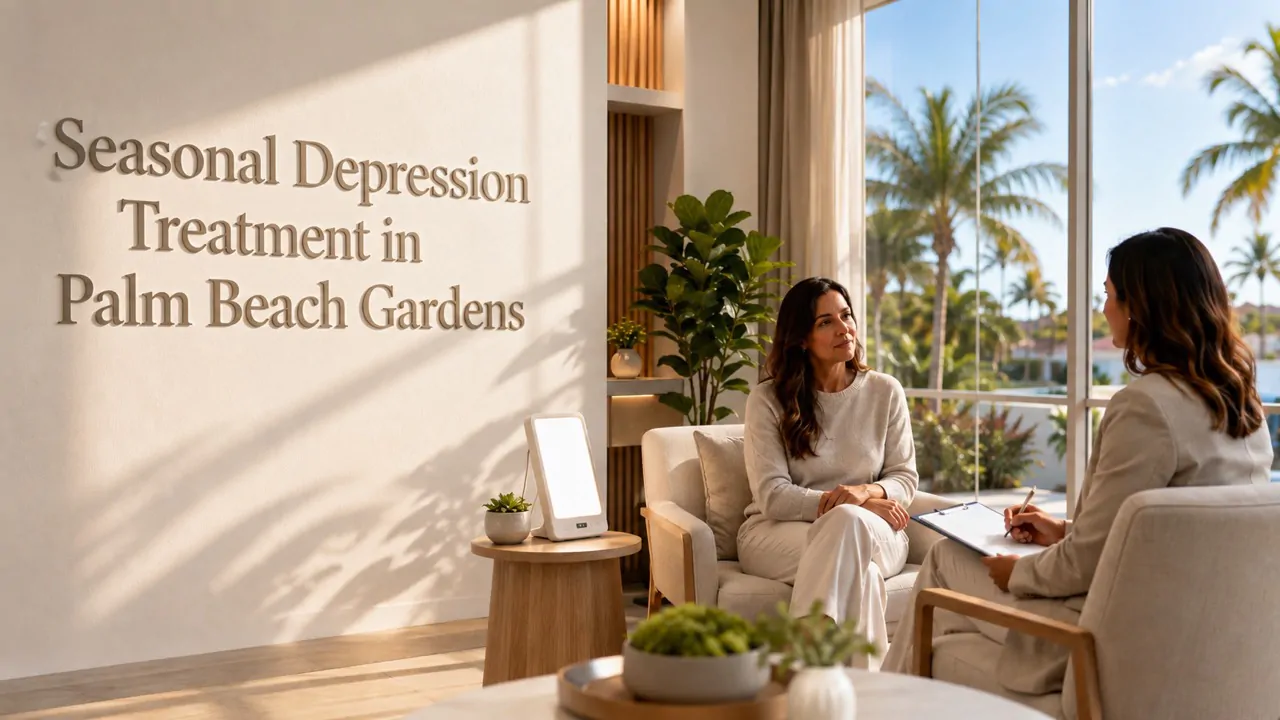
There is a persistent assumption in South Florida that seasonal depression does not happen here. We have sunshine year-round and mild winters. People move here specifically to escape the gray months up north. So how could anyone develop seasonal affective disorder that Palm Beach Gardens residents would recognize?
The assumption is wrong, and it causes real harm. People who need seasonal depression treatment in Florida frequently go undiagnosed for years because neither they nor their providers think to look for it. They assume something else must be wrong. They blame stress, work, aging, or their own character. Meanwhile, a treatable condition goes unaddressed. This page explains what seasonal affective disorder is, why it occurs in Florida despite the climate, what the evidence-based first-line options are, and where more intensive care fits for the smaller group whose symptoms do not respond to standard treatment. At Allay Health & Wellness, we believe seasonal depression treatment is a spectrum, and knowing where you sit on it determines what comes next.
What Is Seasonal Affective Disorder, and Why Does It Happen in Florida?
Seasonal affective disorder is a recognized pattern of major depressive disorder in which episodes recur at a predictable time of year, most commonly beginning in fall or winter and remitting in spring. It is formally classified as major depressive disorder with a seasonal pattern rather than a standalone illness. That classification matters because it means SAD is not a milder or lesser form of depression. It is major depression that follows a calendar, and seasonal depression treatment should be approached with that seriousness.
The National Institute of Mental Health notes that seasonal affective disorder is more than the winter blues and involves the same symptom burden as other forms of major depression, including persistent low mood, loss of interest, low energy, changes in sleep and appetite, and difficulty concentrating. Patients experiencing depression getting worse in winter in Florida should understand that geography does not exempt them from this diagnosis.
Why Florida Residents Are Not Immune
The mechanism driving the need for seasonal depression treatment is not simply about temperature or how pleasant the weather is. It is primarily about light exposure and circadian rhythm disruption. Even in Palm Beach County, daylight hours shrink meaningfully between the summer solstice and the winter solstice. South Florida loses roughly three hours of daylight across that span. That is a smaller change than Minnesota or Maine experiences, but it is not zero, and for a sensitive individual, it can be enough. Other Florida-specific factors get overlooked. Many residents work indoors in air-conditioned environments and get less actual sunlight than the climate suggests. Retirees and remote workers may spend most daylight hours inside. Critically, a large portion of the South Florida population consists of transplants from northern states who carry an established vulnerability with them. Moving south does not reset that neurobiology. It may reduce severity, but it does not eliminate the predisposition.
This is why SAD treatment in Palm Beach County providers see is often delayed. Patients do not connect symptoms to a seasonal pattern because they have internalized the idea that Florida sunshine is protective. It is not, and that delay means many spend multiple winters undiagnosed before anyone considers seasonal depression treatment as a framework for what they are experiencing.
First-Line Treatments for Seasonal Affective Disorder
This is the most clinically important section on this page. It needs to be stated plainly: light therapy, psychotherapy, and antidepressant medication are the established first-line seasonal depression treatment options for seasonal affective disorder. They are supported by decades of research, endorsed by major clinical bodies, and appropriate for the large majority of patients with a seasonal pattern. They should be tried before anything more intensive is considered.
- Light therapy is the cornerstone of first-line seasonal depression treatment and involves daily exposure to a bright light box, typically 10,000 lux, for 20 to 30 minutes each morning during the affected season. It is the most studied intervention specifically for SAD and is generally considered first-line. The American Psychiatric Association recognizes light therapy as an evidence-supported intervention for seasonal patterns of depression. It is low-cost, widely accessible, and has a favorable safety profile for most patients.
- Cognitive behavioral therapy adapted for SAD has been studied directly against light therapy and shows comparable outcomes, with some research suggesting more durable benefits across subsequent seasons. It addresses the behavioral withdrawal and cognitive patterns accompanying seasonal episodes rather than only the physiological trigger.
- Antidepressant medication, particularly SSRIs, is an established seasonal depression treatment option, and bupropion carries specific FDA approval for the prevention of seasonal major depressive episodes in adults with a history of that pattern.
- Vitamin D assessment is reasonable, though evidence for supplementation as a SAD treatment is mixed, and it is not a substitute for the interventions above.
Any honest discussion of seasonal depression therapy options begins here. A clinic that leads with ketamine for a patient who has never tried a light box is not practicing good medicine. At Allay, we will tell you directly if first-line care is where you belong.
Light Therapy vs Ketamine for Depression: Understanding Where Each Fits
Patients researching light therapy vs ketamine for depression usually want to know which one they should be doing. The honest answer is that for most people with SAD, these are not competing options at the same decision point. They sit at different places in the treatment sequence.
Light therapy is first-line and is where treatment should start for nearly every patient with SAD. Ketamine is not a first-line intervention for anything in psychiatry. The two are not alternatives to weigh against each other at the outset. Light therapy comes first. Ketamine, if it enters the picture at all, comes much later and only for a specific subset. The comparison becomes genuinely relevant in one narrow situation: a patient who has completed an adequate light therapy trial, tried psychotherapy, tried at least two antidepressants at adequate doses and durations, and still experiences severe episodes each season. At that point, the picture has shifted from straightforward SAD to treatment-resistant depression following a seasonal pattern, and the conversation changes accordingly.
When First-Line Options Do Not Work: Where Ketamine May Fit
Some patients do not respond adequately to first-line seasonal depression treatment. When that happens across multiple adequate trials, the diagnosis functionally becomes treatment-resistant depression with a seasonal component rather than uncomplicated SAD. This distinction is not semantic. It determines what treatment options are clinically appropriate to consider. Our work with treatment-resistant depression is where these patients belong clinically. The same threshold applies: inadequate response to at least two antidepressants at appropriate doses and durations, alongside a documented trial of seasonal-specific interventions.
Winter depression help Florida patients need at this stage looks different from the seasonal depression treatment they needed at the beginning. It is no longer about optimizing light exposure. It is about whether a different neurobiological pathway needs to be addressed, because the monoamine pathways that antidepressants target have already been shown to be insufficient for that individual.
The Off-Label Reality: Both Spravato and IV Ketamine
This must be stated clearly and without ambiguity. Neither IV ketamine nor Spravato is FDA-approved for seasonal affective disorder.
IV ketamine for depression of any kind is an off-label use. Ketamine’s only FDA-approved indication is as a general anesthetic. Its use for depression, including depression with a seasonal pattern, has not been specifically approved by the FDA.
Spravato (esketamine) is FDA-approved only for treatment-resistant depression in adults and for depressive symptoms in adults with MDD with acute suicidal ideation or behavior. SAD is not among its approved indications. If a seasonal pattern has progressed to meet criteria for treatment-resistant major depressive disorder, that underlying TRD diagnosis is what gets evaluated, not the seasonal pattern itself. Any clinic offering seasonal affective disorder treatment to Florida patients search for has an obligation to explain this accurately.
IV Ketamine for Treatment-Resistant Seasonal Depression
For the narrow group whose seasonal depression treatment has proven unsuccessful across first-line options, off-label IV ketamine may be worth a clinical evaluation. The mechanism is genuinely different from what first-line SAD options target, which is the clinical rationale for considering it after those options have failed. Ketamine acts on the brain’s glutamate system through NMDA receptor modulation rather than the serotonin and norepinephrine pathways that SSRIs and SNRIs address. Some research suggests this may support neuroplasticity processes relevant to mood regulation. Our work with ketamine therapy for depression covers this mechanism and what a standard treatment course involves in more clinical detail.
At Allay, IV ketamine is administered slowly through an intravenous line in a private, monitored room. A licensed clinician is present throughout and tracks vital signs continuously. Sessions last 40 to 60 minutes. A standard initial course involves six infusions over two to three weeks. For patients wondering what the ketamine experience actually feels like before committing to an evaluation, and how many ketamine therapy sessions are needed, sets realistic expectations about the timeline. No outcome from seasonal depression treatment using off-label ketamine is guaranteed. Responses vary substantially, and the research base examining ketamine in seasonal patterns specifically is thinner than for non-seasonal treatment-resistant depression.
Risks and Side Effects of Seasonal Depression Treatment
Every treatment option has potential benefits and risks, which is why a thorough discussion takes place before care begins. Patients considering seasonal depression treatment in Florida receive individualized education about possible side effects, safety precautions, and alternative treatment options. The goal is to help every patient make informed decisions while selecting the most appropriate seasonal depression treatment in Florida based on their diagnosis, medical history, and clinical needs.
- Dissociation is a temporary altered state involving changes in perception of time, space, or self. It is an expected effect at therapeutic doses and is monitored by clinical staff throughout every session.
- Sedation means patients may not drive on the day of any session. A responsible adult must arrange transportation home without exception.
- Blood pressure changes are common during infusions. Vital signs are checked before, during, and after every session.
- Nausea and dizziness are generally mild and typically resolve within the observation period.
- Psychological effects during sessions, including anxiety or heightened emotional responses, occur for some patients. Clinical staff are present throughout to provide support.
- Controlled substance considerations apply because ketamine is a Schedule III controlled substance under federal law. Dependency risk at supervised therapeutic doses is considered low but is not zero, a question addressed honestly regarding whether ketamine is addictive. Patients with any substance use history are evaluated with additional care.
Light therapy carries its own considerations. It can trigger hypomania in patients with undiagnosed bipolar disorder, may cause eye strain or headaches, and requires consistent daily use. It is safer than ketamine by a wide margin, which is precisely why it comes first.
Is a Seasonal Depression Treatment Consultation Right for You?
Not everyone reading this needs what Allay Health and Wellness offers, and we would rather say so than book an appointment that does not serve you.
A consultation about seasonal depression treatment likely makes sense if you have a documented seasonal pattern of major depressive episodes, have completed an adequate trial of light therapy, have engaged with psychotherapy, have tried at least two antidepressants at adequate doses and durations without sufficient relief, and are an adult 18 or older seeking evaluation. A consultation is probably premature if you have never tried light therapy, have not discussed a seasonal pattern with a primary care provider or psychiatrist, are looking for a first-line intervention, or are seeking treatment for a minor.
If you fall into the second group, that is good news. Well-established, lower-risk, more accessible options are still available to you. Our mental health resource covers the broader landscape, and our ketamine therapy FAQ answers common questions for anyone considering evaluation later.
FAQs about Seasonal Depression Treatment in Florida
- Does seasonal affective disorder really happen in Florida?
Yes. It is under-recognized here because of the assumption that sunshine is protective, but daylight hours still decrease measurably between summer and winter, indoor work reduces actual light exposure regardless of climate, and transplants from northern states retain their vulnerability. Seasonal affective disorder that Palm Beach Gardens residents experience is real and diagnosable, and many people begin exploring seasonal depression treatment in Florida after receiving a proper diagnosis. - Should I try light therapy before considering ketamine?
Yes, in nearly every case. Light therapy is a first-line seasonal depression treatment in Florida for SAD with strong evidence, low cost, and a favorable safety profile. Ketamine is not a first-line treatment for anything and is only appropriate after multiple adequate first-line trials have failed. - Is ketamine approved for seasonal affective disorder?
No. IV ketamine for depression of any kind is off-label. Spravato is FDA-approved for treatment-resistant depression and MDD with acute suicidal ideation or behavior, not for seasonal affective disorder. Neither is approved specifically for SAD. - What if my seasonal depression is severe?
Severity does not change the treatment sequence, but it does change the urgency of evaluation. Severe episodes warrant prompt attention from a psychiatrist or primary care provider. If you are experiencing suicidal thoughts, call or text 988 immediately rather than waiting for an appointment. - How is seasonal depression treatment different from regular depression treatment?
The main difference in seasonal depression treatment in Florida is at the first-line stage, where light therapy is specific to seasonal patterns and bupropion carries a specific FDA indication for seasonal episode prevention. Once a patient’s presentation becomes treatment-resistant, the treatment considerations converge with those for non-seasonal treatment-resistant depression. - Do I need a referral to schedule a consultation?
No referral is required. We do ask patients to bring documentation of their diagnosis, their full medication history including doses and durations, and any record of light therapy or psychotherapy trials. A comprehensive evaluation helps determine whether seasonal depression treatment in Florida is appropriate based on your symptoms, medical history, and previous treatments.
Schedule a Consultation for Seasonal Depression Treatment in Palm Beach Gardens
If your seasonal depression has not responded to light therapy, psychotherapy, and multiple antidepressant trials, and you want a team that will evaluate your situation honestly rather than sell you something, Allay is ready to talk. We will tell you plainly if first-line seasonal depression treatment is where you should focus instead. That conversation costs nothing.
Allay Health and Wellness treats adult patients 18 years and older exclusively.
Allay Health and Wellness
11000 Prosperity Farms Rd, Suite 101
Palm Beach Gardens, FL 33410
Email: [email protected]
Phone: (561) 421-6444
Call our office directly to request a free consultation. We serve patients from Palm Beach Gardens, West Palm Beach, Jupiter, North Palm Beach, Riviera Beach, Royal Palm Beach, Lake Park, Palm Springs, Juno Beach, Boca Raton, Delray Beach, Deerfield Beach, Stuart, and communities across Palm Beach and Broward Counties.
Medical Disclaimer: This content is educational only and not a substitute for professional medical advice, diagnosis, or treatment. Light therapy, psychotherapy, and antidepressants are established first-line treatments for seasonal affective disorder and should be tried first. IV ketamine for depression is off-label and not FDA-approved for any psychiatric condition. Spravato is approved only for treatment-resistant depression and MDD with acute suicidal ideation, not for SAD. Individual outcomes vary and are never guaranteed. Allay treats adults 18 and older only.
Reviewed by Nicholas Marino, MBA, Co-Founder and CEO, Allay Health and Wellness