Ketamine Therapy Compared with Traditional Antidepressants: Key Differences Explained
If you have spent months or years trying different antidepressants without finding lasting relief, you have probably started asking deeper questions about why those medications work for some people and not for others. Understanding ketamine therapy vs traditional antidepressants is one of the most important steps a patient with treatment-resistant depression can take before pursuing any next step in their care.
Allay Health and Wellness serves patients from across Palm Beach County, Broward County, and South Florida from its Palm Beach Gardens clinic. This page provides a thorough, clinically honest comparison of ketamine therapy vs traditional antidepressants, covering how each works, who each is designed for, what the realistic risks are on both sides, and what the regulatory and insurance implications are for patients in Florida. No exaggerated claims are made here. Understanding the actual difference between ketamine therapy and traditional antidepressants requires accurate information, not marketing language.
How Traditional Antidepressants Work
Understanding ketamine therapy vs traditional antidepressants begins with knowing how conventional antidepressants are designed to work. Most first-line antidepressants increase the availability of neurotransmitters involved in mood regulation. Selective serotonin reuptake inhibitors (SSRIs) primarily affect serotonin, while serotonin-norepinephrine reuptake inhibitors (SNRIs) influence both serotonin and norepinephrine. Other antidepressant classes, including tricyclic antidepressants and monoamine oxidase inhibitors, also target these neurotransmitter systems through different mechanisms. For many people living with depression, these medications can reduce symptoms and improve daily functioning when taken consistently under medical supervision.
However, conventional antidepressants do not work equally well for everyone. Some patients continue to experience significant depressive symptoms despite trying multiple medications at appropriate doses and durations. Researchers believe that differences in genetics, receptor sensitivity, medication metabolism, and underlying brain biology may contribute to these varied responses. Traditional antidepressants also generally require several weeks before their full clinical effects can be evaluated, and they must usually be taken every day. These differences explain why the ketamine therapy vs traditional antidepressants discussion becomes important for patients whose symptoms have not improved adequately with standard treatment approaches.
How Ketamine Therapy Works: A Different Mechanism
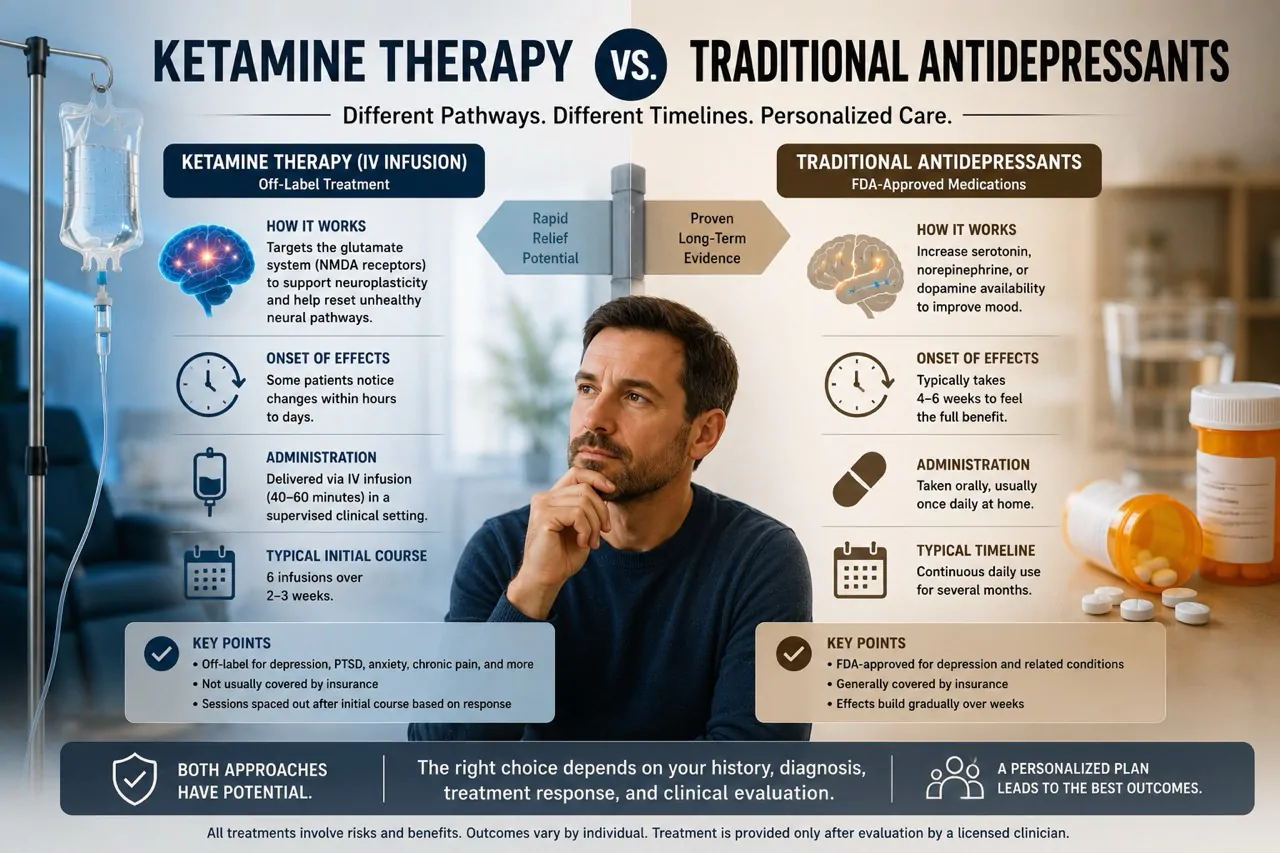
One of the most significant differences in the ketamine therapy vs traditional antidepressants comparison is the way each treatment affects the brain. Rather than primarily targeting serotonin, norepinephrine, or dopamine, ketamine acts on the glutamate system by modulating NMDA receptors. Glutamate is the brain’s primary excitatory neurotransmitter and plays an important role in communication between nerve cells. Researchers continue to study how this mechanism may influence mood regulation and brain function in people with depression.
Current research suggests that ketamine may promote neuroplasticity, the brain’s ability to form and strengthen neural connections, through pathways that differ from those used by conventional antidepressants. This unique mechanism is one reason ketamine-based treatment has received considerable scientific attention for patients who have not responded sufficiently to traditional medications. However, it is important to understand that responses vary from person to person. Not everyone benefits from ketamine-based treatment, and no specific outcome can be guaranteed. The ketamine therapy vs traditional antidepressants comparison highlights that these treatments work through different biological pathways rather than representing one treatment simply replacing the other. Every patient should undergo a comprehensive clinical evaluation before treatment decisions are made.
Speed of Action: A Key Difference in Ketamine Therapy vs Traditional Antidepressants
Another important consideration in the ketamine therapy vs traditional antidepressants comparison is how quickly each treatment may begin affecting depressive symptoms. Traditional antidepressants often require four to six weeks of consistent daily use before clinicians can determine whether they are providing meaningful benefit. During this period, patients may experience side effects before noticeable improvement occurs. While this timeline is appropriate for many individuals, it can be challenging for patients who continue to experience severe depressive symptoms while waiting for medication response.
Ketamine therapy has been studied because some research has reported earlier changes in mood-related symptoms for certain patients compared with conventional antidepressants. Some individuals describe improvement within the first several IV ketamine infusions, while Spravato has also demonstrated a relatively different onset profile in its approved clinical studies. Even so, treatment response varies considerably, and no patient should expect improvement within a specific number of sessions. The ketamine therapy vs traditional antidepressants discussion should therefore focus on evidence-informed expectations rather than guaranteed timelines. Decisions about treatment should always consider diagnosis, medical history, previous treatment response, safety, and long-term clinical planning with a licensed healthcare provider.
FDA Status: The Most Important Regulatory Distinction
When comparing ketamine therapy vs traditional antidepressants, the regulatory difference is essential and must be stated clearly.
Traditional antidepressants (SSRIs, SNRIs, TCAs, MAOIs) are FDA-approved for the treatment of depression and related conditions. They are prescribed for their approved indications and are generally covered by insurance when prescribed appropriately.
IV ketamine infusion therapy for depression is an off-label use of ketamine. The FDA approved ketamine as an anesthetic in the 1970s. Its use for depression, anxiety, PTSD, chronic pain, and other mental health conditions through IV infusion has not been specifically approved by the FDA for those indications. Off-label prescribing by licensed clinicians is legal and common in medicine, but patients must understand this distinction before beginning treatment. Any clinic or provider that describes IV ketamine as FDA-approved for depression is providing inaccurate information.
Spravato (esketamine) occupies a different position in the ketamine therapy vs traditional antidepressants comparison. Spravato is FDA-approved, but only for two specific indications: treatment-resistant depression in adults used alongside an oral antidepressant, and depressive symptoms in adults with major depressive disorder with acute suicidal ideation or behavior. It is not approved for anxiety, PTSD, chronic pain, or any other condition. Its approval for TRD makes it the only FDA-approved ketamine-based option for patients in that category.
Side Effects: Comparing Ketamine Therapy vs Traditional Antidepressants
Every treatment has a side-effect profile, and understanding both sides of the ketamine therapy vs traditional antidepressants comparison requires looking at each honestly.
Traditional antidepressant side effects commonly include weight gain, sexual dysfunction, sleep disturbances, emotional blunting, nausea (particularly when starting or stopping medication), and increased anxiety in the early weeks of treatment. Discontinuation syndrome, which occurs when a patient stops an antidepressant too quickly, can cause significant physical and psychological symptoms. Long-term side effects vary by medication class and individual patient.
Ketamine therapy side effects are different in character and typically occur during or immediately after the session rather than accumulating over weeks of daily use. Known and expected side effects of IV ketamine infusion therapy and Spravato sessions include:
- Dissociation: A temporary altered state involving changes in how you perceive time, space, or self. This is an expected effect at therapeutic doses and is monitored by clinical staff throughout every session.
- Sedation: Patients may not drive on the day of any ketamine infusion or Spravato session. A responsible adult must arrange transportation home.
- Blood pressure changes: Temporary increases in blood pressure occur during both IV ketamine infusions and Spravato sessions. Vital signs are checked before, during, and after every session.
- Nausea and dizziness: Generally mild and typically resolving within the post-session observation window.
- Psychological effects during sessions: Some patients experience anxiety, unusual perceptions, or emotional intensity during the infusion. Clinical staff are present throughout and are trained to provide support.
For Spravato specifically, the FDA’s REMS (Risk Evaluation and Mitigation Strategy) program requires that every session be administered in a certified healthcare setting with a minimum two-hour observation period afterward, and that the medication never be dispensed for home use. These requirements exist precisely because of the side-effect profile described above.
Controlled substance status is a side-effect consideration unique to the ketamine side of the ketamine therapy vs traditional antidepressants comparison. Ketamine is a Schedule III controlled substance under federal law. Dependency risk at supervised therapeutic doses in a licensed clinical setting is considered low but is not zero.
Administration: How the Experience Differs
The lived experience of ketamine therapy vs traditional antidepressants is fundamentally different, and patients should understand this before choosing a path.
Traditional antidepressants are taken orally, at home, once daily. After the initial titration period, they typically require minimal ongoing clinical contact beyond regular medication management appointments.
Ketamine therapy requires in-person clinical sessions. IV ketamine infusions at Allay Health and Wellness take place in a private room with a licensed clinician present throughout. Sessions last approximately 40 to 60 minutes. A standard initial therapy course involves six infusions over two to three weeks. Some patients continue with periodic maintenance infusions based on their clinical response.
Spravato sessions involve the patient self-applying the nasal spray under clinical supervision in a certified healthcare setting, followed by a mandatory two-hour observation period. The induction schedule involves two sessions per week for four weeks, followed by tapering to maintenance based on clinical response. For patients interested in the broader therapeutic support that can accompany ketamine sessions, our ketamine-assisted therapy in Florida program combines supervised infusions with preparation and integration work.
Insurance and Cost: A Practical Difference in Ketamine Therapy vs Traditional Antidepressants
Insurance coverage is one of the most practically significant differences in the ketamine therapy vs traditional antidepressants comparison.
Traditional antidepressants are generally covered by insurance when prescribed for approved indications.
IV ketamine infusion therapy for depression is an off-label treatment and is generally not covered by most insurance plans. Allay Health and Wellness accepts Medicare, Cigna, United Healthcare, and Aetna, and our team verifies your benefits before treatment begins and provides a clear cost summary before any sessions are scheduled.
Spravato sits in a different position in this comparison because of its FDA-approved status for treatment-resistant depression. It may be eligible for coverage under Medicare Part B, Cigna, United Healthcare, and Aetna when medical necessity criteria are met, and documentation is properly submitted.
Coverage is never guaranteed and varies by individual plan, diagnosis, and documentation. Our team manages preauthorization, benefit verification, and appeals on your behalf.
Who Is Ketamine Therapy Designed For in This Comparison?
The ketamine therapy vs traditional antidepressants discussion is not about declaring one treatment universally better than another. Traditional antidepressants remain the recommended first-line treatment for many people with newly diagnosed depression because they have been extensively studied and are appropriate for a wide range of patients. Ketamine-based treatments are generally considered when standard approaches have not provided adequate symptom improvement despite appropriate use. Understanding this distinction is essential when comparing available treatment options.
Before recommending IV ketamine or Spravato, the clinical team at Allay Health and Wellness performs a comprehensive evaluation that reviews diagnosis, previous medication trials, current medications, medical history, psychiatric history, and potential safety concerns. Patients with treatment-resistant depression or related depressive conditions may be candidates for further evaluation, but eligibility is determined individually rather than by diagnosis alone. Factors such as cardiovascular health, current medications, and overall treatment goals are also considered. The ketamine therapy vs traditional antidepressants comparison ultimately focuses on matching the right treatment approach to the right patient rather than promoting one option over another.
Ketamine Therapy vs Traditional Antidepressants: The Role of Ongoing Care
An important part of the ketamine therapy vs traditional antidepressants conversation is understanding that ketamine-based treatment is not intended to replace every other aspect of mental health care. Instead, it may become one component of a broader treatment plan developed by your healthcare team. Many patients continue psychotherapy, medication management, lifestyle interventions, or other supportive services alongside ketamine treatment. Ongoing care helps clinicians monitor progress, adjust treatment when appropriate, and address co-occurring conditions that may influence recovery.
Some patients continue taking oral antidepressants after beginning ketamine-based treatment, while others require different long-term management strategies based on their diagnosis and response. Decisions about medication changes are always made by licensed clinicians after careful evaluation, rather than by replacing existing therapies automatically. The ketamine therapy vs traditional antidepressants comparison should therefore be viewed as part of a larger discussion about individualized mental health care for anxiety treatment, PTSD treatment, and chronic pain. At Allay Health and Wellness, treatment planning emphasizes continuity of care, regular follow-up, patient education, and realistic expectations rather than presenting ketamine therapy as a standalone or permanent solution.
Why Patients Choose Allay Health and Wellness for This Decision
Deciding between ketamine therapy vs traditional antidepressants is an important clinical decision that should be guided by experienced healthcare professionals rather than marketing claims or online opinions. Patients deserve accurate information about available treatment options, FDA approval status, potential benefits, known risks, and the evidence currently available. At Allay Health and Wellness, every recommendation begins with a thorough clinical evaluation rather than assuming one treatment approach is appropriate for everyone.
For more than eight years, our ketamine clinic, Allay Health and Wellness, has provided specialized mental health services to patients throughout South Florida. Our multidisciplinary team includes Katy Redfield, APRN, Co-Founder and Program Director; Nicholas Marino, MBA, Co-Founder and CEO; Roland Verfaillie, Ph.D., Clinical Director with more than 30 years of mental health experience; and Daniel Cartledge, M.D., consultant and double board-certified in pain management and physical medicine and rehabilitation. Patients comparing ketamine therapy vs traditional antidepressants receive individualized, comprehensive guidance, careful monitoring, and honest communication throughout the evaluation process. Our approach is built on patient safety, evidence-informed care, and helping individuals understand their options without overstating expected outcomes.
FAQs about Ketamine Therapy vs Traditional Antidepressants
Q1. Is ketamine therapy better than traditional antidepressants?
The ketamine therapy vs traditional antidepressants comparison is not about one option being universally better. Traditional antidepressants are often first-line treatment, while ketamine-based therapies may be considered when standard treatments have not provided sufficient relief.
Q2. Can I take ketamine therapy and traditional antidepressants at the same time?
Yes, in many cases. The ketamine therapy vs traditional antidepressants discussion often includes combination treatment. Spravato is used with an oral antidepressant for treatment-resistant depression, while IV ketamine requires an individualized medication review.
Q3. Why might IV ketamine help when antidepressants have not worked?
In the ketamine therapy vs traditional antidepressants comparison, IV ketamine acts on the glutamate system, whereas many antidepressants target serotonin, norepinephrine, or dopamine. Individual responses vary, and no specific outcome is guaranteed.
Q4. Is IV ketamine for depression FDA-approved?
No. IV ketamine for depression is an off-label use. Ketamine is FDA-approved as an anesthetic, while Spravato is FDA-approved only for specific depression-related indications.
Q5. How long do the effects of ketamine therapy last compared to antidepressants?
Traditional antidepressants may provide ongoing benefit when effective and taken consistently. Ketamine-based treatments often require maintenance sessions, and the duration of benefit differs for each patient.
Q6. Will insurance cover ketamine therapy instead of traditional antidepressants?
Off-label IV ketamine is generally not covered by most insurance plans. Spravato may be covered when eligibility criteria are met. Insurance benefits should always be verified before treatment.
Q7. Can ketamine therapy be used if antidepressants are partially working?
Yes, in some cases. The ketamine therapy vs traditional antidepressants evaluation depends on diagnosis, medication history, symptom severity, and clinical judgment. Partial improvement alone does not automatically qualify someone for ketamine-based treatment.
Q8. What should I bring to a consultation?
Bring diagnosis records, current medications, previous antidepressant names, dosages, treatment durations, and psychiatric evaluations. Complete information helps your clinician make an informed recommendation.
Schedule a Consultation to Allay Health and Wellness
If you have been weighing ketamine therapy vs traditional antidepressants and want to speak with a licensed clinical team that will evaluate your situation honestly, Allay Health and Wellness is ready to help.
Allay Health and Wellness
11000 Prosperity Farms Rd, Suite 101
Palm Beach Gardens, FL 33410
Phone: (561) 421-6444
Email: [email protected]
Contact us to request a free consultation. We serve patients from West Palm Beach, Jupiter, North Palm Beach, Riviera Beach, Royal Palm Beach, Lake Park, Palm Springs, Juno Beach, Stuart, Boca Raton, Delray Beach, Deerfield Beach, and communities across Palm Beach and Broward Counties.
Medical Disclaimer: The information on this page is for educational purposes only and is not a substitute for professional medical advice, diagnosis, or treatment. IV ketamine infusion therapy for depression, anxiety, PTSD, and chronic pain is an off-label use of ketamine and has not been specifically approved by the FDA for these conditions. Spravato (esketamine) is FDA-approved for treatment-resistant depression (used with an oral antidepressant) and for depressive symptoms in adults with major depressive disorder with acute suicidal ideation or behavior only. It is not approved for PTSD, chronic pain, anxiety, or any other condition. Individual treatment outcomes from both ketamine therapy and traditional antidepressants vary and are not guaranteed. All treatments at Allay Health and Wellness are provided only after evaluation and approval by a licensed clinician. Ketamine is a Schedule III controlled substance administered exclusively under medical supervision in a licensed clinical setting. Spravato is available only through certified healthcare settings under the FDA REMS program. Viewing this page does not establish a provider-patient relationship.
Reviewed by Nicholas Marino, MBA, Co-Founder and CEO, Allay Health and Wellness