
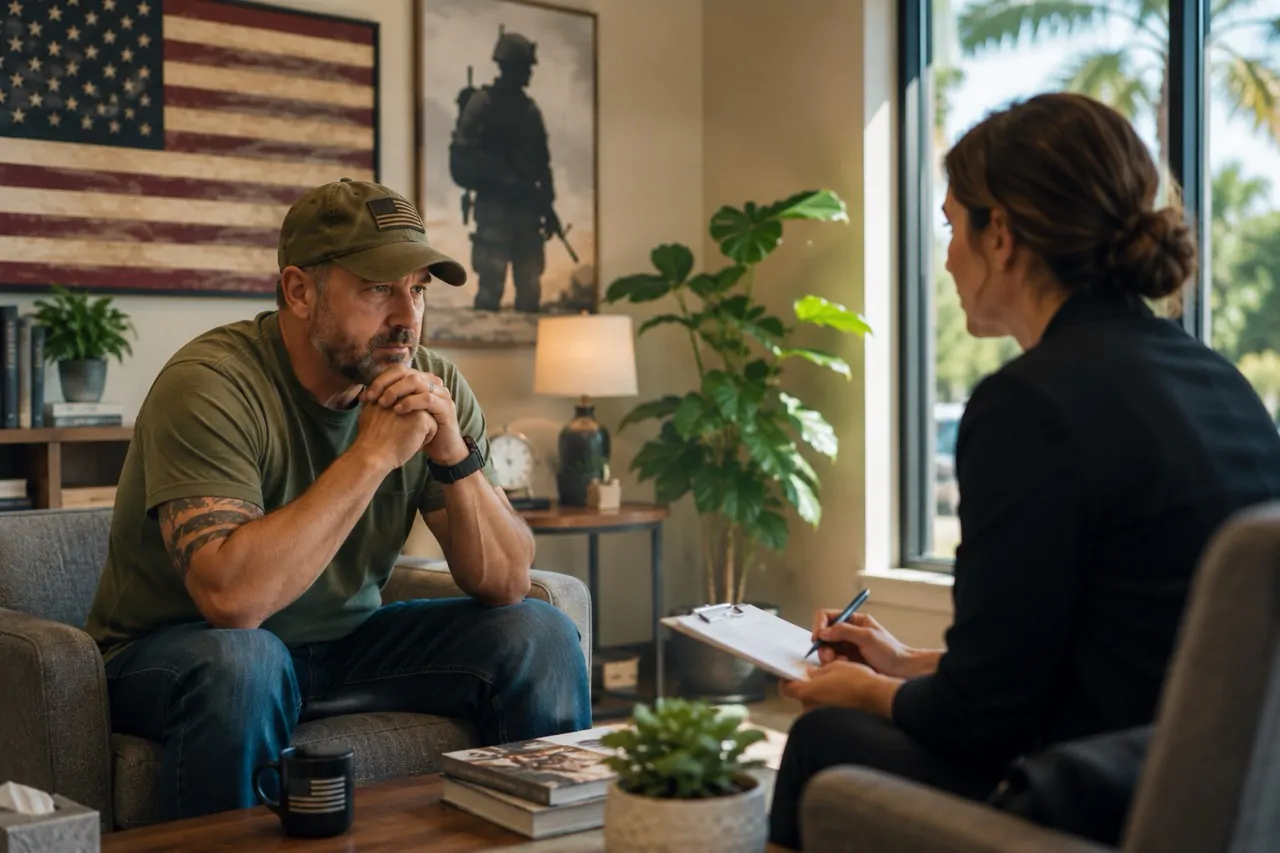
What Is Trauma-Informed Care? A Guide for Veterans in Palm Beach
Many veterans return home carrying invisible weight. Sleep gets harder. Triggers show up without warning. Daily life feels different than it used to. This shift is not a personal failure. It is often a sign that trauma has changed how the brain and body respond to stress. Trauma-informed veteran care exists to address exactly this, with respect and clinical understanding built into every step.
This guide explains what trauma-informed veteran care actually means, why certain causes drive its approach, and what veterans in Palm Beach County can expect from this type of treatment.
What Causes the Need for Trauma-Informed Veteran Care?
Trauma changes the brain in measurable ways. Combat exposure, repeated high-stress environments, and sudden life transitions all play a role. Military training teaches constant alertness. That skill keeps service members safe in combat. Back home, that same alertness can become exhausting and disruptive.
Trauma-informed veteran care recognizes these causes directly. It does not treat symptoms in isolation. It looks at the full context of military experience and how that experience shaped the nervous system.
How Combat Exposure Shapes the Brain
Combat exposure is one of the most common causes behind PTSD symptoms in veterans. Repeated exposure to danger trains the brain to expect threat constantly. Over time, this training affects memory, emotional regulation, and sleep. The brain stays on alert even in safe environments. This is a biological response, not a character flaw. Trauma-informed veteran care starts by acknowledging this reality clearly. For more on how this connects to PTSD specifically, visit our guide on ketamine therapy for PTSD in Palm Beach Gardens.
Why Transition Stress Adds Another Layer
Leaving military life is rarely simple. Structure disappears. Identity shifts. Many veterans lose a built-in sense of community overnight. This transition stress often layers on top of existing trauma. Veterans may struggle with purpose, routine, or a sense of belonging. Trauma-informed veteran care accounts for this layered experience. Providers do not separate combat trauma from transition stress. They treat both as connected parts of the same story.
The Role of Repeated High-Stress Environments
Some veterans experience trauma not from a single event, but from sustained exposure to high-stress conditions. This pattern is sometimes called complex trauma. Complex trauma can affect emotional regulation differently than a single traumatic incident. Symptoms may build gradually rather than appear suddenly. Recognizing this cause matters. It shapes how providers approach evaluation and treatment planning under trauma-informed veteran care.
What Is Trauma-Informed Care, Exactly?
Trauma-informed care is a clinical approach built around safety, trust, and choice. It recognizes that trauma affects the whole person, not just one symptom. Providers using this approach communicate clearly. They avoid rushing patients into decisions. They build trust gradually rather than assuming it from the start. For veterans, this distinction matters. Trauma-informed veteran care respects military experience without requiring veterans to relive it unnecessarily during evaluation.
How This Differs From Standard Mental Health Care
Standard mental health care often focuses on diagnosing and managing symptoms quickly. Trauma-informed veteran care takes a slower, more contextual approach. Providers ask different questions. They explore what happened, not just what symptoms are present. They give patients more control over pacing and treatment decisions. This approach often feels more respectful to veterans who value autonomy and direct communication.
Signs Trauma May Be Affecting a Veteran’s Daily Life
Recognizing trauma early supports better long-term outcomes. These signs often point toward a need for specialized care.
- Hypervigilance or constant alertness in situations that do not require it
- Sleep disruption or recurring nightmares tied to past experiences
- Emotional numbness or distance from family and close relationships
- Irritability or sudden anger that feels disproportionate to the situation
If these signs sound familiar, speaking with a provider experienced in trauma-informed veteran care is a meaningful next step.
What Veterans Can Expect During Evaluation
A trauma-informed evaluation looks different from a typical intake appointment. The pace is slower. The questions are more contextual. Providers review military history alongside current symptoms. They ask about specific triggers, sleep patterns, and emotional responses. They explain each step before moving forward. This structure reduces the chance of re-traumatization during the evaluation process itself. It also builds a foundation of trust early in treatment.
Treatment Options Within a Trauma-Informed Framework
Trauma-informed veteran care is not one single treatment. It is a framework that can include several approaches. Trauma-focused psychotherapy remains a common starting point. Cognitive behavioral therapy may also support veterans working through specific thought patterns tied to trauma.
For some veterans, providers may discuss IV ketamine as an additional option. IV ketamine for PTSD is considered off-label use and is not FDA-approved for this specific indication. Eligibility requires a full clinical evaluation by a licensed provider. Learn more about how this fits into broader PTSD care on our page about ketamine therapy for veterans with PTSD in Florida.
Anxiety and Trauma Often Overlap
Many veterans experience anxiety alongside PTSD symptoms. The two conditions often share overlapping causes, including chronic stress exposure and disrupted sleep patterns. Addressing anxiety as part of trauma-informed veteran care can support a more complete treatment plan. Isolating one condition while ignoring the other rarely produces the best outcome. For more information on anxiety-specific care, visit our anxiety treatment page in Palm Beach Gardens.
Understanding Insurance and Cost Considerations
Cost concerns should never prevent a veteran from exploring care options. Coverage may apply depending on diagnosis, plan type, and documentation. Some treatments within trauma-informed veteran care, including certain ketamine services, may be eligible for partial coverage. Verifying benefits directly with your insurer is an important first step. Our clinic offers guidance on this process. Learn more on our page about ketamine clinic insurance coverage in Palm Beach Gardens.
Why Local Access Matters for Palm Beach County Veterans
Veterans in Palm Beach County benefit from having specialized care close to home. Long travel adds stress to an already difficult process. Trauma-informed veteran care delivered locally allows for more consistent follow-up. It also supports stronger continuity between sessions, which matters for trauma recovery. For a deeper look at this approach in our community, read our veteran’s guide to trauma-informed care.
A Word on Realistic Expectations
Trauma-informed veteran care does not promise a fixed timeline or guaranteed outcome. Every veteran’s experience is different. Some patients notice improvement earlier. Others need more time and a different combination of approaches. This variability is normal, not a sign that treatment has failed. Providers adjust care plans based on individual progress. Patience and open communication support better results over time.
When to Reach Out for Support
Veterans should not wait for symptoms to become unmanageable before seeking help. Early support often leads to better outcomes. If you notice persistent anxiety, sleep problems, or emotional withdrawal, these are reasons enough to start a conversation. You do not need a crisis to justify seeking care. If you are experiencing thoughts of self-harm or suicide, please contact the Veterans Crisis Line immediately by calling 988 and pressing 1, or by texting 838255.
Schedule a Consultation With Allay Health and Wellness
If you are a veteran in Palm Beach County looking for trauma-informed veteran care, our team is here to help. We take time to understand your story before recommending any treatment path. Coverage may apply for certain services. Verify with your provider before beginning treatment.
Address:11000 Prosperity Farms Rd, Suite 101, Palm Beach Gardens, FL 33410
Phone: (561) 421-6444
Email: [email protected]
Disclaimer: This content is for educational purposes only and does not constitute medical advice. IV ketamine for PTSD and anxiety is an off-label use and is not FDA-approved for these indications. Treatment outcomes vary by individual and require evaluation by a licensed healthcare provider. No outcomes are guaranteed. If you are experiencing a mental health crisis, contact the Veterans Crisis Line at 988 (press 1) or visit VeteransCrisisLine.net.