Understanding Esketamine vs Ketamine for Depression Treatment
Depression is a complex mental health condition affecting millions of people with varying symptoms and treatment responses. Ketamine and esketamine represent clinically used options under careful medical supervision for certain patients. This article provides education about esketamine vs ketamine for depression rather than treatment recommendations.
Allay Health & Wellness offers both treatment options following comprehensive evaluation by licensed healthcare providers. Understanding differences between these approaches helps patients have informed discussions with their medical teams. Professional assessment determines which option, if any, may be appropriate for individual circumstances.
Understanding Depression and the Need for Individualized Care
Depression manifests differently among individuals with varying symptom combinations, severity levels, and treatment responses. Some patients find relief through conventional approaches while others continue struggling despite multiple interventions. Treatment response variability explains why some individuals explore alternative or emerging therapies under supervision.
Individualized care considers each person’s unique medical history, symptom presentation, and treatment goals comprehensively. Licensed providers assess multiple factors before recommending specific interventions for depression management. Professional guidance ensures treatments align with patient needs while maintaining safety standards throughout care.
What Is Ketamine?
Ketamine has been used in medical settings as an FDA-approved anesthetic for surgical procedures since 1970. More recently, healthcare providers have explored ketamine’s potential applications in mental health care under controlled conditions. Ketamine use in mental health settings today occurs in licensed clinical environments with comprehensive oversight.
Licensed providers conduct thorough evaluations before administering ketamine therapy for any psychiatric condition. Treatment requires continuous monitoring throughout sessions ensuring patient safety and appropriate responses. Medical supervision distinguishes therapeutic ketamine applications from recreational misuse occurring outside clinical settings.
What Is Esketamine?
Esketamine is a specific formulation chemically related to ketamine but representing a distinct medication. This medication received FDA approval in 2019 for treatment-resistant depression under specific conditions. Esketamine is prescribed by qualified healthcare providers and administered in medical settings under professional oversight.
Treatment with esketamine follows established protocols requiring patient observation for extended periods following administration. Professional oversight ensures proper patient selection, dosing, and safety monitoring throughout treatment courses. Medical supervision remains essential for all esketamine applications in mental health care settings.
Esketamine vs Ketamine for Depression: Key Differences
Understanding esketamine vs ketamine for depression requires examining several important distinctions between these treatment options. Both approaches involve medical supervision but differ in regulatory status, administration methods, and clinical protocols. Professional evaluation determines which option aligns better with individual patient circumstances and needs.
Chemical and Formulation Differences
Esketamine represents one specific isomer or mirror-image form of the ketamine molecule chemically. Traditional ketamine contains both isomers while esketamine isolates the S-enantiomer specifically. This chemical distinction influences how each medication is formulated and administered in clinical practice. Understanding these differences helps clarify why treatments follow different protocols and approval pathways.
How Each Is Used in Clinical Care
Ketamine for depression typically involves intravenous infusion administered over 40 to 60 minutes. Esketamine uses nasal spray self-administration under direct medical observation in certified facilities. Both approaches require professional supervision but differ in delivery methods and observation protocols. Clinical settings ensure safety through continuous monitoring during and after medication administration.
Regulation and Oversight
Esketamine holds FDA approval specifically for treatment-resistant depression when used with oral antidepressants. Ketamine’s psychiatric applications represent off-label use of an FDA-approved anesthetic medication. This regulatory distinction significantly impacts insurance coverage, prescribing protocols, and safety requirements. Both treatments require comprehensive safety protocols under licensed medical provider oversight.
How Ketamine and Esketamine Affect the Brain
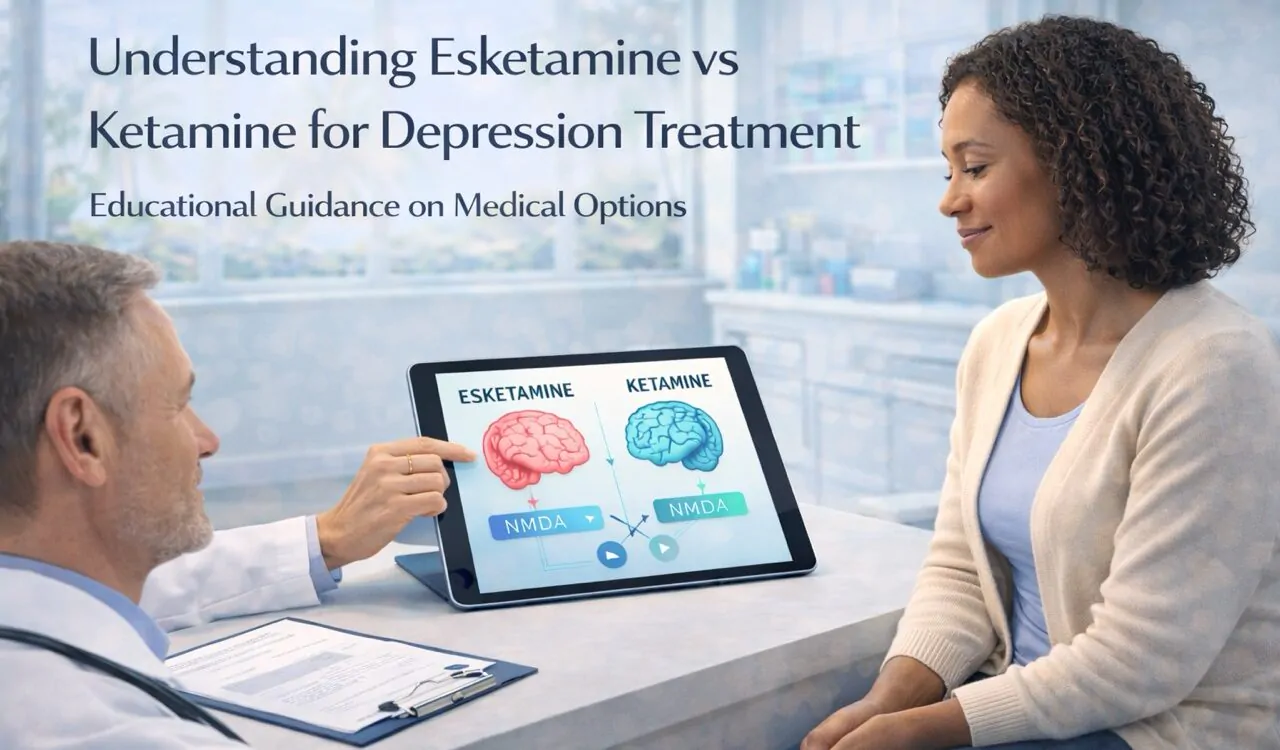
Both ketamine and esketamine interact with brain communication pathways through NMDA receptor modulation. These medications influence glutamate neurotransmitter systems differently from traditional antidepressants targeting serotonin. Glutamate plays crucial roles in neural plasticity or the brain’s ability to form new connections.
Research suggests these medications may help reset certain brain circuits involved in depression symptom generation. Understanding the difference between esketamine and ketamine mechanisms requires examining molecular-level interactions simplified here. Ketamine vs esketamine mental health care applications both target similar brain systems through slightly different pathways.
Why One Approach May Be Considered Over Another
Individual medical history influences whether esketamine vs ketamine for depression makes more sense clinically. Provider assessment considers diagnosis, prior treatment responses, insurance coverage, and patient preferences comprehensively. Response to previous antidepressant trials helps guide treatment selection between available options.
Not all patients are appropriate candidates for either treatment approach requiring careful screening. Consultation with qualified healthcare providers determines which option, if any, aligns with individual circumstances. Treatment selection depends on comprehensive evaluation rather than universal recommendations applied broadly.
What Esketamine and Ketamine Are Not
Understanding limitations helps patients maintain realistic expectations about esketamine vs ketamine for depression treatments. Neither approach represents a cure for depression but rather options for symptom management under supervision. Clear information about what these treatments cannot provide supports informed decision-making and appropriate care.
Important limitations include:
- Not a cure for depression but treatment options that may help reduce symptoms for some patients
- Not guaranteed outcomes as individual responses vary significantly based on multiple factors
- Not replacements for comprehensive mental health care including therapy and lifestyle modifications
- Not self-administered treatments as both require professional medical oversight in clinical settings
How Allay Health & Wellness Approaches Depression Care
Allay Health & Wellness provides patient-centered, personalized mental health care addressing each individual’s unique needs. Ketamine-assisted therapy represents one option among multiple evidence-based approaches we offer under supervision. Our comprehensive services include mental health care, ketamine therapy, IV therapy, and holistic wellness support.
Treatment selection at Allay Health & Wellness follows thorough evaluation by licensed healthcare providers. We offer both ketamine and esketamine options when clinically appropriate for individual patient circumstances. Our team emphasizes realistic expectations and ongoing support throughout mental health treatment journeys.
Is Esketamine or Ketamine Right for Everyone with Depression?
Neither esketamine vs ketamine for depression option is appropriate for all patients experiencing depressive symptoms. Professional consultation with qualified mental health providers determines individual treatment suitability comprehensively. Medical screening identifies contraindications and assesses whether potential benefits outweigh risks for each patient.
Open discussion with healthcare providers ensures informed decision-making about innovative treatment approaches. Qualified care teams evaluate multiple factors before recommending specific interventions for depression management. Seeking professional guidance protects patient safety while exploring appropriate treatment options.
Learn More About Depression Care Options at Allay Health & Wellness
If you’re considering esketamine vs ketamine for depression treatment, professional consultation is the essential first step. Allay Health & Wellness provides comprehensive evaluations by licensed providers experienced in both treatment approaches. We invite you to schedule a consultation to discuss your symptoms, treatment history, and recovery goals.
Our team emphasizes conversation and thorough evaluation rather than pressure or promises about outcomes. Contact Allay Health & Wellness to explore whether ketamine or esketamine therapy may be appropriate for your needs. We’re here to provide guidance and support throughout your mental health care journey.
Address: 11000 Prosperity Farms Rd, Suite 101, Palm Beach Gardens, FL 33410
Phone: (561) 421-6444
Email: [email protected]
Disclaimer:
This information is for educational purposes only and is not a substitute for professional medical advice, diagnosis, or treatment. Always consult a qualified healthcare provider before starting or changing any treatment. Ketamine is FDA-approved as an anesthetic. Esketamine (Spravato) is FDA-approved for treatment-resistant depression when used with oral antidepressants. Other psychiatric uses of ketamine are considered off-label and are only provided under the supervision of licensed healthcare providers when deemed clinically appropriate. Both ketamine and esketamine are Schedule III controlled substances. Treatment outcomes vary based on individual circumstances, and results cannot be guaranteed.